
A Simple Blood Test
to Prevent Colorectal Cancer

Detecting advanced precancerous polyps before they become cancer

COLORECTAL DIAGNOSTICS
The Problem

Colorectal cancer is the 2nd leading cancer killer, but it's preventable

Annual US Cancer Deaths
Lung & Bronchus ~125K
Colorectal #2 KILLER ~53K
Pancreas ~51K
Breast ~43K
Liver ~30K
153,000
new CRC cases in the US each year
53,000
deaths per year, the 2nd deadliest cancer
99% PREVENTABLE
of colorectal cancers are preventable by removing polyps early
If detected during routine surveillance, cancer is almost always prevented.

Post-polypectomy patients need surveillance every 3-10 years, but many are not being monitored. There is no blood-based alternative for this population.

The Surveillance Gap

Millions of high-risk patients fall through the cracks

ColoPro
Target Market
25M
Had polyps removed
High Risk Group
10–15M
Missed follow-up
~2.5M miss each year
Why Patients Miss Surveillance

Barriers span cognitive, logistical, and health system domains

COGNITIVE-EMOTIONAL
Fear of pain and invasive procedure
Low perceived risk when asymptomatic
Negative past experience shapes future avoidance
LOGISTICAL
Bowel prep is the most cited deterrent
Companion required for post-sedation transport
69% of US counties lack a gastroenterologist
HEALTH SYSTEM
76.9% cite fragmented care as top barrier
Wait times doubled: 73 to 161 days (2019-2021)
No systematic recall to re-engage lapsed patients
Introducing ColoPro

A blood test that detects precancerous polyps

No alternative test exists for surveillance patients. These patients have already had polyps removed, classifying them as high risk. 10.7% will re-develop advanced polyps within 3 years. They need regular monitoring, but 40-60% don't return. ColoPro can re-engage them and catch new polyps before cancer develops.
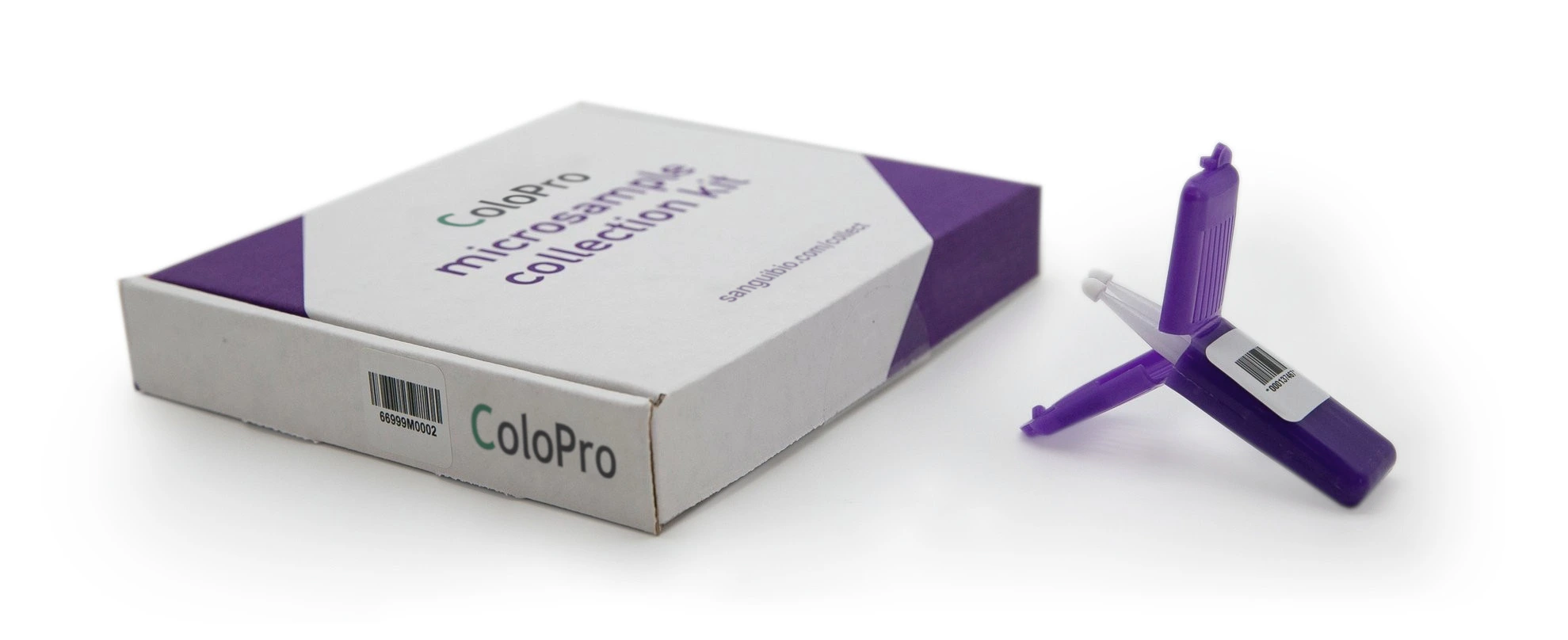
ColoPro microsample collection kit

A single drop (30 μL) fingerprick blood sample collected at home removes practical barriers to sample collection. Gastroenterologist-ordered annual testing engages surveillance patients. That drives compliance, creates a recall mechanism, and enables gastroenterologists to prioritise positive-result patients for colonoscopy.


Why Current Tests Fall Short

Existing tests detect cancer, not precancerous polyps

None are validated for surveillance.
Stool
24%
Advanced Polyp Detection
Misses 3 in 4 precancerous lesions
Stool
42%
Advanced Polyp Detection
Excludes patients with polyp history
Blood
13%
Advanced Polyp Detection
Misses 9 in 10 precancerous lesions
Blood
>90%
Advanced Polyp Detection
5× better at finding precancerous polyps vs other blood tests
Patient Journey

ColoPro enables annual blood-based surveillance

Surveillance population
STEP 1

Surveillance Population

25M Americans who had polyps removed need repeat colonoscopy every 1-5 years.
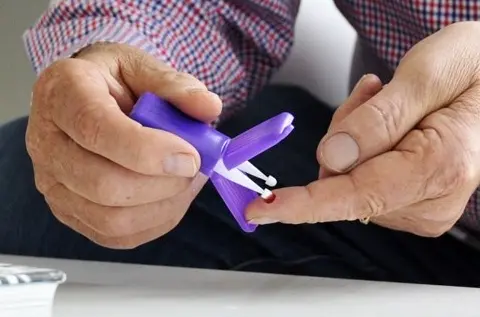
At-home blood collection
STEP 2

At-Home Blood Collection

Patient collects a single drop (30 μL) fingerprick sample at home. Mailed to the lab.

ColoPro COLORECTAL DIAGNOSTICS
Protein analysis
STEP 3

Protein Analysis

Mass spectrometry and machine learning identify protein biomarkers.

Risk report
STEP 4

Risk Report

Gastroenterologist receives a risk report. High-risk patients prioritised for colonoscopy.

Patient Preference

78-93% of patients prefer blood over stool

Osborne 2012
Australia · n=956
78%
chose blood over stool

Postal survey, aged 50-74. Women showed stronger preference (82% vs 74%).

Adler 2014
Germany · n=109
83%
chose blood over stool

Among colonoscopy-refusers, 90 chose blood vs 16 stool. Lifted compliance to 98%.

Ioannou 2021
USA · n=460
93.5%
chose blood over stool

At health fair: 0% chose colonoscopy, 6.5% FIT, 93.5% blood-based testing.

These studies used standard venous draws. ColoPro uses a single drop (30 μL) fingerprick, less invasive still. High preference translates directly to higher surveillance compliance.
Loading interactive science section...